RFP template: Choosing AI technology for enterprise customer service
An excel sheet containing 100+ detailed evaluation questions across seven categories in scoring-ready format you can send directly to vendors.
Learn More

Global customer service expectations are changing quickly, and agentic AI is now part of that baseline.
To understand what customers actually expect, Ada partnered with NewtonX to survey 2,000 consumers across North America, Europe, and Asia-Pacific (APAC), all of whom had recent experience with AI.
This post breaks down what the data reveals across regions: What customers expect globally, where those expectations differ in practice, and how to design an agentic customer experience (ACX) that works across markets.
The takeaway is straightforward: the foundation of a strong experience is consistent, but how you deliver it needs to adapt by region.
Across all three regions, customer service expectations are highly aligned. When asked to prioritize what matters most in an interaction, accuracy and problem-solving ranked highest globally, followed by data privacy, speed and availability, and, in dead last, empathy.
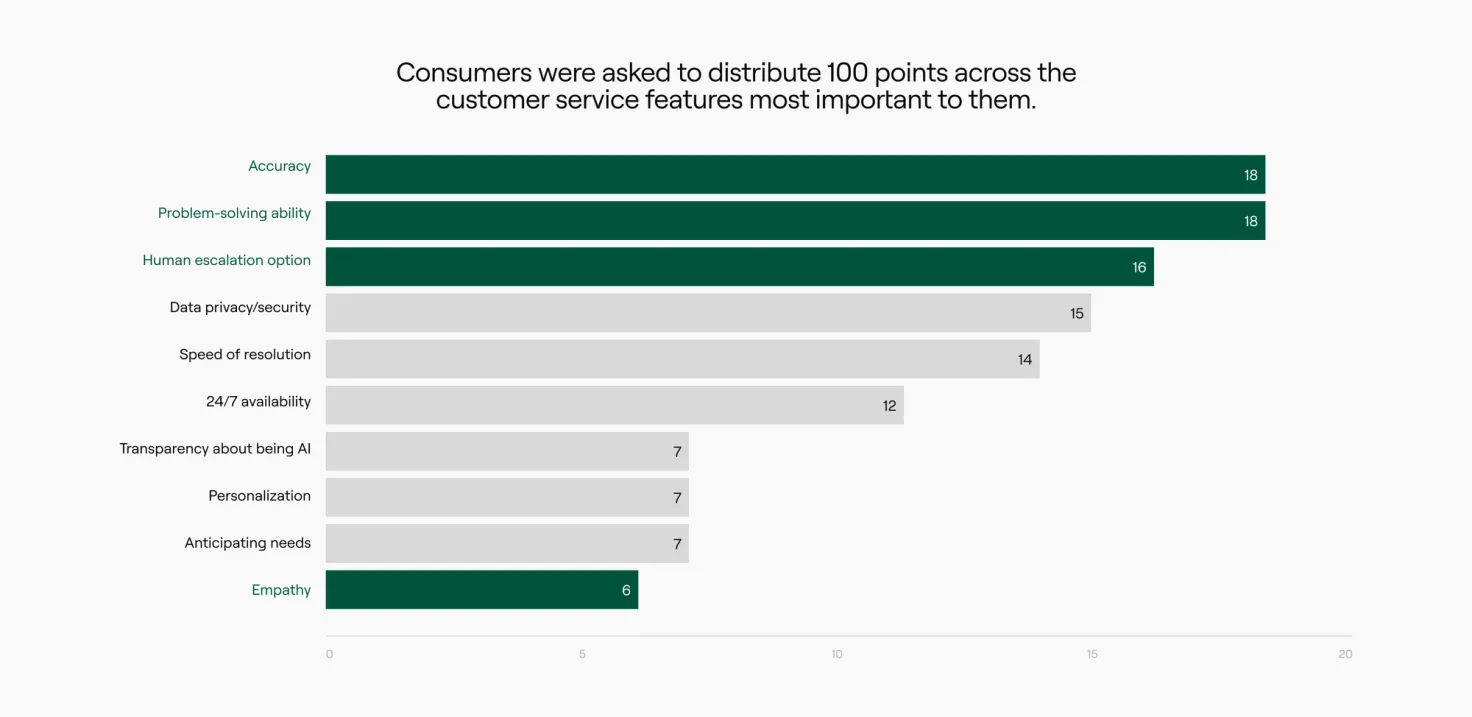
What consumers want is fundamentally consistent across regions: AI that resolves their issue accurately, is transparent about what it is, and steps aside when it can't help. Where regions diverge is in how quickly trust breaks when those expectations aren't met, and which expectation carries the most weight by market.
The research points to two design decisions that consistently shape trust in agentic customer experience:
These are not secondary features. They directly influence whether customers continue the interaction or leave.
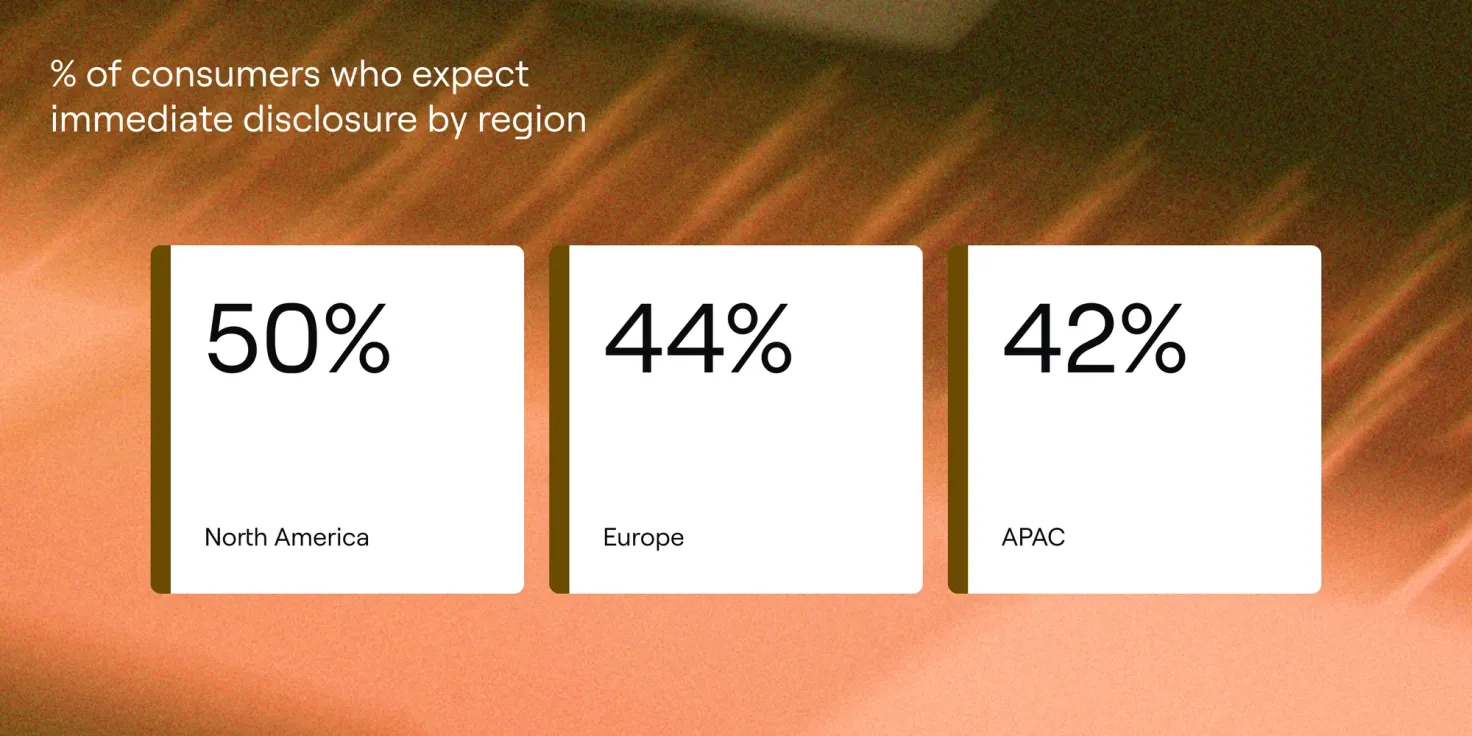
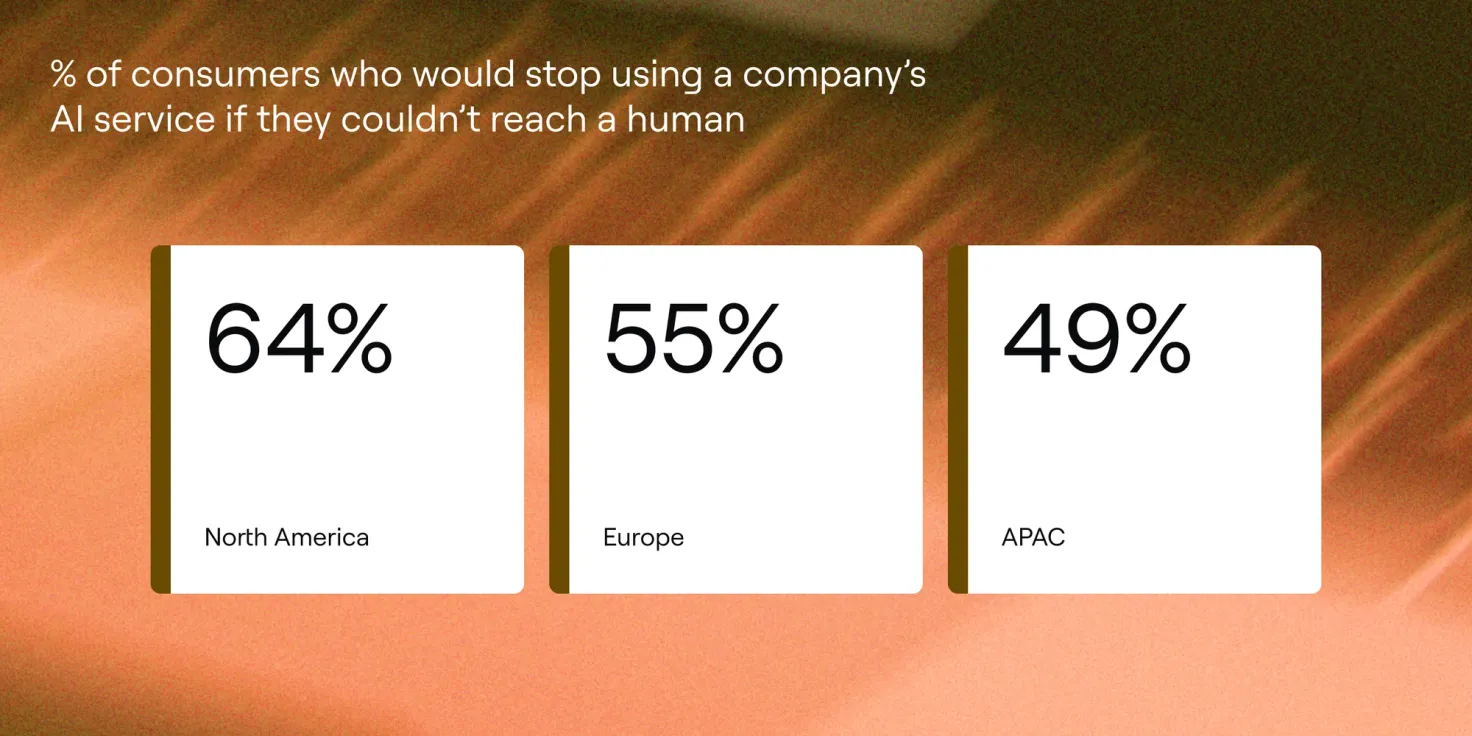
Across regions, 74% of consumers expect disclosure before or at the start of an interaction, and 57% would stop using a company’s AI service if they couldn’t reach a human.
That consistency is useful. It defines a clear baseline for what agentic customer experience needs to deliver.
Across regions, a high majority of consumers expect to know they’re interacting with AI before or at the start of the interaction. The differences come down to timing and enforcement.
Across all three regions, the direction is consistent: clear, upfront disclosure is becoming a standard part of the experience.
Escalation is one of the most consistent customer service expectations globally and one of the clearest points of regional variation. Across regions, the pattern is consistent: customers expect AI agents to resolve issues and to hand off when they can’t.
Yet, only 14% of businesses offer frictionless escalation at any point in the interaction. That gap between expectation and experience remains one of the biggest sources of friction for agentic AI in customer experience today.
Beyond disclosure and escalation, the data highlights a consistent set of failure points. When AI agents fall short, the issues are operational:
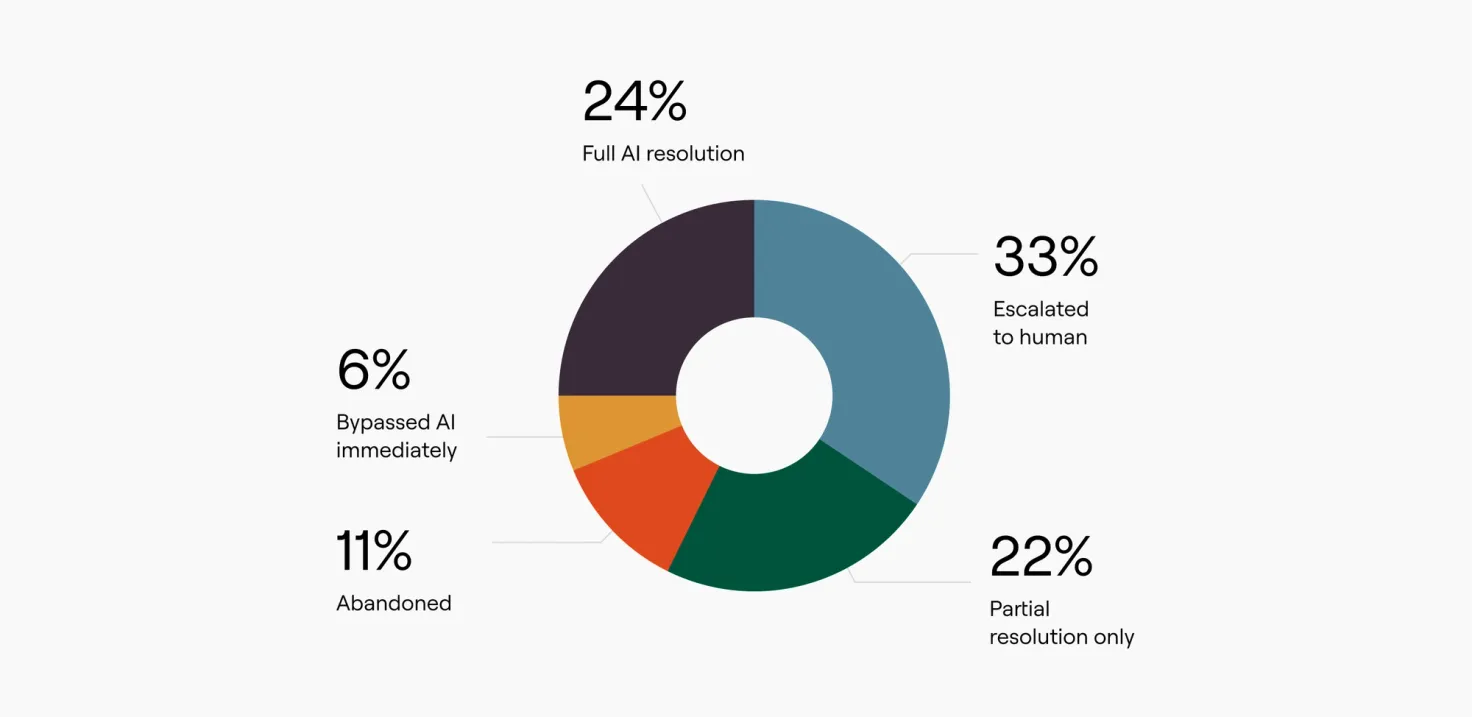
These are common patterns across regions and age demographics . Customers often describe the same experience: the AI agent gets close to resolving the issue, but stops short. That partial progress creates frustration, especially when escalation isn’t available.
 Gen Z and Boomers want the same thing from AI customer service. Here’s where it falls apart.
 This is also where abandonment happens. 11% of consumers report leaving the interaction entirely without resolution or escalation.
The implication is straightforward: customers will engage with AI agents, but they expect them to follow through.
The strategic implication here isn't to build three separate AI experiences. It's to build one AI core strong enough to clear the universal bar, then configure how it's delivered for each region.
The universal requirements are non-negotiable:
There is no regional shortcut around those fundamentals. The most effective approach is to build one core experience that performs consistently, and configure how it’s delivered in each market.
That includes:
This is where many AI programs stall—when capability exists, but delivery isn’t aligned to how customers actually engage.
Delivering this consistently requires more than deploying AI agents. It requires an operating model.
Agentic customer experience (ACX) connects:
With Ada’s ACX Operating Model, teams can:
This creates a system where the core experience remains consistent, but regional differences are handled through configuration and performance improves with every interaction. Instead of managing disconnected deployments, teams operate a single, evolving experience.
Customers are already aligned on what they expect from agentic customer experience: AI agents that resolve issues accurately, are transparent from the start, and provide a clear path to a human when needed.
That baseline holds across regions. What varies is how quickly customers respond when those expectations aren’t met, and where the experience breaks down first.
For global teams, consistency is the work. The same experience needs to hold up across markets with different expectations around disclosure, escalation, and regulation. That means building a core experience that performs reliably, and configuring how it’s delivered in each region.
That’s what defines the agentic customer experience in 2026, and what allows it to scale.
There’s a common assumption that consumers are skeptical of AI in customer service. The data says otherwise. Our 2026 report surveyed 2,000 consumers to understand how people actually experience AI in customer service today.
Read report